
5 MOST COMMON SKINCARE PROBLEMS AND THE SOLUTIONS
- Dec 8, 2021
- 6 min read
Updated: Dec 28, 2021
This new article in our blog will help you say bye to Dark spots, large pores, and dryness!
1. DARK CIRCLES

Eyes after DARK CIRCLES disappear
Most eye creams do very little other than moisturise the skin’s surface and temporarily plump up fine lines and wrinkles due to their hydration effects. One thing that a lot of people don’t know that the common skincare problems like ‘eye bags’ or puffiness in fact they are different to dark circles or shadows underneath the eye.
‘Bags’ or puffiness is a separate issue to dark circles, although both problems can coexist. Therefore the same person may have both dark circles and puffiness. When we get older, the skin around the eyes becomes thinner, decreasing in laxity (it becomes loose). The subcutaneous fat pad which sits under the skin also starts to become thin and starts to descend, or ‘go south’. These factors can result in darkness and puffiness around the eye as fluid accumulates.
In general terms, the skin around the eye is thin and vulnerable to damage from UV radiation, pollution and the environment. Moisturising the area and wearing regular sunscreen is one of the best ways of preventing damage to ‘normal’ skin, as well as limiting further pigmentation problems once dark circles have already developed.


2. SPOT PRONE SKIN

There are many reasons why your skin has spot prone.
Firstly, maybe you are always bringing your phone. There are many studies have shown that touching screens contain large numbers of bacteria on their surface. The pressure created by placing your phone against your cheek may result in activation of the oil-producing glands. When this is combined with heat generated from the phone and bacteria present on the phone surface, skincare problems and imperfections may occur. If possible, try to use earphones and regularly wipe your smartphone surface clean. My tip is carrying wires in my handbag to keep my phone as clean as possible.

You should cleanse your face twice a day with a face wash designed for acne-prone skin (if you suffer from acne). Products that contain salicylic acid and zinc may be beneficial. Exfoliate your skin weekly – this will remove the upper layer of skin cells, resulting Certain styling products, such as oils and waxes, can cause forehead acne, particularly blackheads or whiteheads because they block pores. If your hair is very oily, this may further aggravate the problem.

Ideally, it’s best to avoid wearing make-up to the gym. Sweat and increased temperature brought on by exercise can lead to open pores which can become blocked by particles of make-up. This can easily lead to breakouts and, in turn, other skincare problems like uneven skin texture.

Secondly, high body temperature could be a problem. Because when your body raises temperature sweat blocking pores and friction from clothes rubbing against the body combined by bacterial action can result in acne, particularly over the back and chest. To reduce the risk of this, it is important to shower and change into fresh clothing as soon as possible after exercise. Using body washes containing salicylic acid can be helpful to those prone to spots following exercise.

Finally, make-up brushes is also a potential problem. They often aren’t looked after properly and are a breeding ground for bacteria. Many laboratory-based tests where make-up items have been swabbed have shown the growth of all sorts of different microbes that can cause infection. Despite this, the majority of women do not clean their make-up bags or cosmetic products on a regular basis. Make-up brushes should be cleaned at least on a monthly basis – which many women neglect to do. Otherwise, bacteria can build up on the surface from constantly being in contact with our skin.

3. DARK SPOTS


Dark Spots
Antioxidants have been the new big thing for a few years now. It’s hard to avoid coming across the word all the time in food and skincare but not a lot of people really understand them. They help our skin fight against the daily things that can cause ageing symptoms such as dullness, loss of elasticity, fine lines, uneven texture, wrinkles and dark spots.

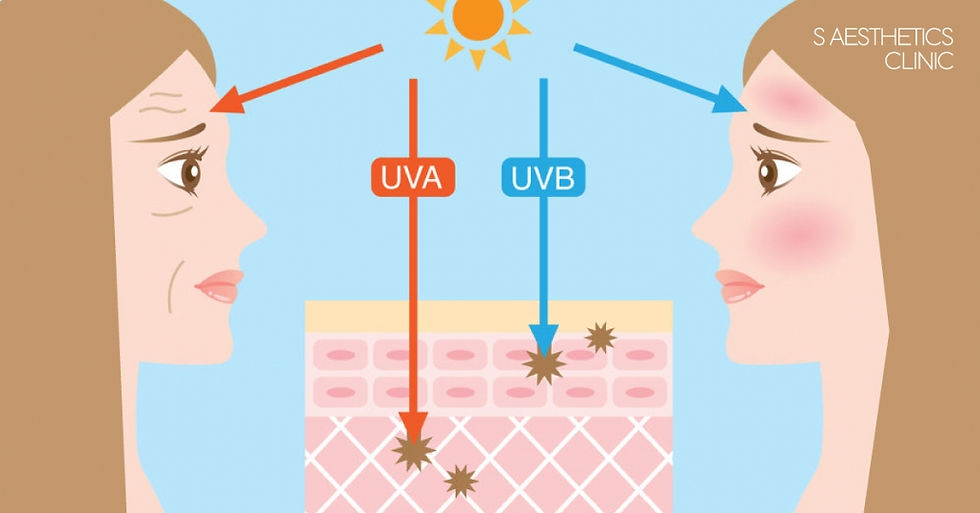
Ultraviolet radiation from the sun causes many skin ageing like fine lines, wrinkles, and blotchy, pigmented skin. Dark spots are flat brown marks that commonly appear on sun-exposed sites such as the face, neck, and hands. They most commonly develop in those with a fair complexion but can be seen in olive skin types also. They’re the result of excess skin pigmentation or melanin and are quite common in those aged over 40. These can be helped with certain skincare ingredients such as vitamin C, retinoids, kojic acid, niacinamide, arbutin, azelaic acid and alpha hydroxy acids. Failing this, there are clinic-based treatments which can be carried out by a dermatologist.


Vitamin C, retinoids, kojic acid, niacinamide,... can be helped your skin better
By your 40s (if not earlier) you should be using a retinoid cream at night. Retinoids are vitamin A-based products which have been proven to boost collagen production, improve fine lines and clear skincare problems like pigmentation, in scientific studies. Be patient though – it can take up to six weeks to see effects. Look for over the counter preparations that contain a minimum of 0.1% retinol as an ingredient. Otherwise consult a cosmetic dermatologist who will be able to prescribe you a prescription strength retinoid (e.g. tretinoin 0.05%).
Unfortunately, the sun is the biggest culprit in skincare problems around ageing. As you know that the prevention is easier than cure. Therefore it is imperative to wear a broad-spectrum SPF on sun-exposed sites such as the face, neck and hands. When choosing a sunscreen look for a high protection SPF (SPF30 or higher) to protect against UVB, and the UVA circle logo and/or 4 or 5 UVA stars. Ensure you’re applying plenty of sunscreen 15 to 30 minutes before going out in the sun, reapply every two hours and straight after swimming.

4. ENLARGED PORES
Because we are mammals, we are all covered in fine hairs over the face and body. Pores are simply the opening of tiny hair follicles onto the surface of the skin. They are not surrounded by a muscle and therefore do not have the ability to open and close. It is really common to hear myths about pore size – for example – steam or hot water will open pores. This myth is propagated by glossy magazines, beauticians, and even some doctors!

Those with oily skin tend to have the appearance of enlarged pores as oil tends to collect within them. Pore size can also become more apparent with age. As we get older, the proteins collagen and elastin, that give our skin its structural support, break down dragging the edge of the pore with it making it appear enlarged.

Lastly, genetics have a part to play – if your parents have large pores; chances are that you will as well. This is not to say we can’t help those that worry about their pore size. There are a number of treatments that can help minimise their appearance. These include the use of creams containing retinoids and procedures such as; chemical peels, micro-needling, and laser.

To keep common skincare problems like blackheads at bay there are a few options that you can turn to. These include regular facials with steam extraction, light chemical peels such as mandelic acid, using pore strips, exfoliation once a week, use of face washes that contain salicylic acid and topical treatments containing benzoyl peroxide, salicylic acid or retinoids.”


5. DEHYDRATED SKIN

Maybe you like taking long, hot showers – particularly in the autumn and winter months when the weather becomes cooler and temperatures start to drop. The combination of water and soap or shower gel can lead to moisture loss from the surface of the skin and disruption of the skin’s barrier resulting in dryness or irritation. Those with underlying inflammatory skincare problems and disorders such as eczema or psoriasis need to be extra cautious. Showers should ideally be no longer than 10 minutes with tepid water.

This is right for both face and body. That’s because most of us take showers that are too hot, anyway. Whilst it is tempting to jump into a hot shower for twenty minutes when it’s cold outside, this is probably one of the worst things you can do for your skin. Hot water will remove your skin’s natural oils and quickly deplete natural moisture.
Your skin forms a protective barrier against the elements and one of its main functions is to prevent water loss. In the winter months, there is less production of natural oils (e.g. ceramides, cholesterol, fatty acids) resulting in increased dryness, scaling, and flaking of the skin. It is important to moisturise regularly to combat winter dryness. Moisturisers will bind and retain water, in addition to forming a protective seal preventing further water loss. For best effects, this is should be done straight after showering and then throughout the day as needed.


Moisturisers form a protective seal preventing further water loss


Comments